| Record Information |
|---|
| Version | 2.0 |
|---|
| Creation Date | 2009-07-06 18:11:29 UTC |
|---|
| Update Date | 2014-12-24 20:25:46 UTC |
|---|
| Accession Number | T3D2606 |
|---|
| Identification |
|---|
| Common Name | Dermonecrotic toxin (Pasteurella multocida) |
|---|
| Class | Protein |
|---|
| Description | Pasteurella multocida toxin (PMT) is the major pathogenic deteriment of Pasteurella multocida. Pasteurella multocida can cause a zoonotic infection in humans, which typically is a result of bites or scratches from domestic pets. (2) |
|---|
| Compound Type | - Amide
- Amine
- Bacterial Toxin
- Natural Compound
- Organic Compound
- Protein
|
|---|
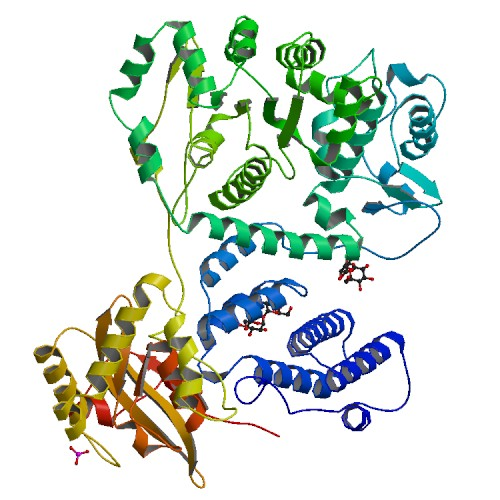
| Protein Structure |  |
|---|
| Synonyms | | Synonym | | Dermonecrotic toxin | | DNT | | Mitogenic toxin | | PMT |
|
|---|
| Chemical Formula | Not Available |
|---|
| Average Molecular Mass | 146382.000 g/mol |
|---|
| CAS Registry Number | Not Available |
|---|
| Sequence | Not Available |
|---|
| Chemical Taxonomy |
|---|
| Description | Not Available |
|---|
| Kingdom | Organic Compounds |
|---|
| Super Class | Organic Acids |
|---|
| Class | Carboxylic Acids and Derivatives |
|---|
| Sub Class | Amino Acids, Peptides, and Analogues |
|---|
| Direct Parent | Peptides |
|---|
| Alternative Parents | Not Available |
|---|
| Substituents | Not Available |
|---|
| Molecular Framework | Not Available |
|---|
| External Descriptors | Not Available |
|---|
| Biological Properties |
|---|
| Status | Detected and Not Quantified |
|---|
| Origin | Exogenous |
|---|
| Cellular Locations | Not Available |
|---|
| Biofluid Locations | Not Available |
|---|
| Tissue Locations | Not Available |
|---|
| Pathways | Not Available |
|---|
| Applications | Not Available |
|---|
| Biological Roles | Not Available |
|---|
| Chemical Roles | Not Available |
|---|
| Physical Properties |
|---|
| State | Liquid |
|---|
| Appearance | Clear solution. |
|---|
| Experimental Properties | | Property | Value |
|---|
| Melting Point | Not Available | | Boiling Point | Not Available | | Solubility | >10 mg/mL | | LogP | Not Available |
|
|---|
| Predicted Properties | Not Available |
|---|
| Spectra |
|---|
| Spectra | | Spectrum Type | Description | Splash Key | Deposition Date | View |
|---|
|
|---|
| Toxicity Profile |
|---|
| Route of Exposure | Ingestion (3) ; inhalation (3) ; dermal (3) |
|---|
| Mechanism of Toxicity | Stimulation of several signalling pathways is induced by PMT. Most remarkable is a potent mitogenic effect. Phospholipase C-beta and the small GTPase Rho are activated due to stimulation of heterotrimeric G proteins of the Galpha(q), Galpha(i), and Galpha(12/13) families. (1) |
|---|
| Metabolism | Free toxin may be removed by opsonization via the reticuloendothelial system (primarily the liver and kidneys) or it may be degraded through cellular internalization via the lysosomes. Lysosomes are membrane-enclosed organelles that contain an array of digestive enzymes, including several proteases. |
|---|
| Toxicity Values | Not Available |
|---|
| Lethal Dose | Not Available |
|---|
| Carcinogenicity (IARC Classification) | No indication of carcinogenicity to humans (not listed by IARC). |
|---|
| Uses/Sources | Pasteurella multocida toxin (PMT) is the major pathogenic deteriment of Pasteurella multocida. (2) |
|---|
| Minimum Risk Level | Not Available |
|---|
| Health Effects | Pasteurella multocida toxin (PMT) is the major pathogenic deteriment of Pasteurella multocida. Pasteurella multocida can cause a zoonotic infection in humans, which typically is a result of bites or scratches from domestic pets. This causes an inflammatory reaction at the infection site (generally a diffuse localized cellulitis). It can also infect other locales, such as the respiratory tract. In more serious cases, a bacteremia can result, causing an osteomyelitis or endocarditis. The bacteria may also cross the blood-brain barrier and cause a meningitis. (2) |
|---|
| Symptoms | Pasteurella multocida can cause a zoonotic infection in humans, which causes an inflammatory reaction at the infection site (generally a diffuse localized cellulitis). It can also infect other locales, such as the respiratory tract. In more serious cases, a bacteremia can result, causing an osteomyelitis or endocarditis. The bacteria may also cross the blood-brain barrier and cause a meningitis. (2) |
|---|
| Treatment | This bacterium can be effectively treated with beta-lactam antibiotics, which inhibit cell wall synthesis. It can also be treated with fluoroquinolones or tetracyclines; fluoroquinolones inhibit bacterial DNA synthesis and tetracyclines interfere with protein synthesis by binding to the bacterial 30S ribosomal subunit. Because P. multocida is most often acquired as a result of a bite (notably dog), infections are frequently polymicrobial and involve anaerobic bacteria. As a result, amoxicillin-clavulanate (a beta-lactamase inhibitor/penicillin combination) is seen as the treatment of choice. (2) |
|---|
| Normal Concentrations |
|---|
| Not Available |
|---|
| Abnormal Concentrations |
|---|
| Not Available |
|---|
| External Links |
|---|
| DrugBank ID | Not Available |
|---|
| HMDB ID | Not Available |
|---|
| PubChem Compound ID | Not Available |
|---|
| ChEMBL ID | Not Available |
|---|
| ChemSpider ID | Not Available |
|---|
| KEGG ID | Not Available |
|---|
| UniProt ID | P17452 |
|---|
| OMIM ID | |
|---|
| ChEBI ID | Not Available |
|---|
| BioCyc ID | Not Available |
|---|
| CTD ID | Not Available |
|---|
| Stitch ID | Dermonecrotic toxin |
|---|
| PDB ID | 2EBF |
|---|
| ACToR ID | Not Available |
|---|
| Wikipedia Link | Not Available |
|---|
| References |
|---|
| Synthesis Reference | Not Available |
|---|
| MSDS | T3D2606.pdf |
|---|
| General References | - Orth JH, Preuss I, Fester I, Schlosser A, Wilson BA, Aktories K: Pasteurella multocida toxin activation of heterotrimeric G proteins by deamidation. Proc Natl Acad Sci U S A. 2009 Apr 28;106(17):7179-84. doi: 10.1073/pnas.0900160106. Epub 2009 Apr 15. [19369209 ]
- Wikipedia. Pasteurella multocida. Last Updated 5 August 2009. [Link]
- Wikipedia. Bacterial toxin. Last Updated 27 February 2009. [Link]
|
|---|
| Gene Regulation |
|---|
| Up-Regulated Genes | Not Available |
|---|
| Down-Regulated Genes | Not Available |
|---|